
Resources
Education is an Important Part of Healing
Understanding the factors that influence our thoughts, emotions, behaviors, and physical symptoms can be an important step toward meaningful change. Whether you're exploring chronic pain, trauma, stress, anxiety, or personal growth, the resources below provide evidence-based information to support your journey.
Please note that these resources are intended for educational purposes and are not a substitute for individualized medical or mental health care.
Explore the topics below to learn more about the approaches and concepts that inform my work.
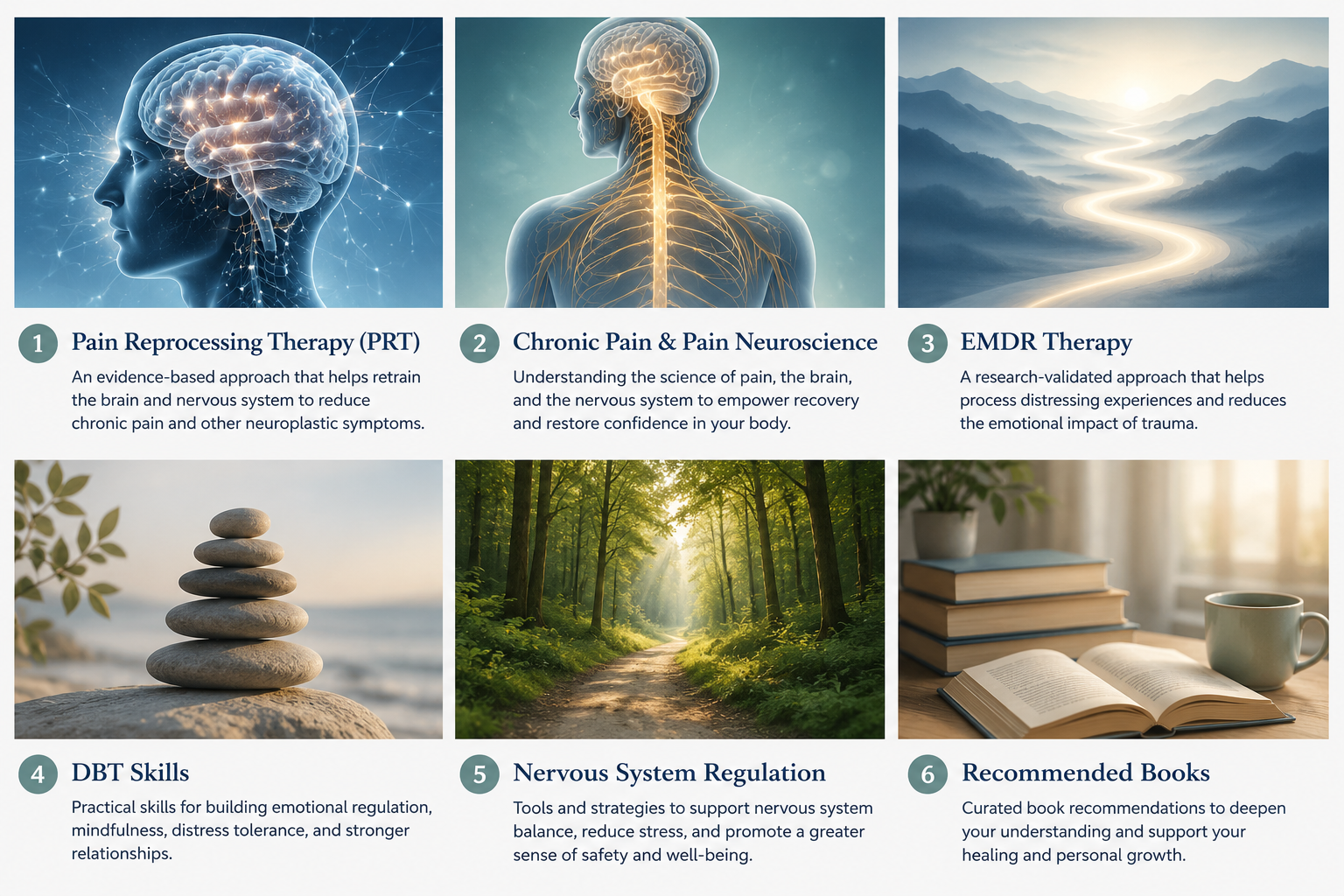
Pain Reprocessing Therapy (PRT)
Pain Reprocessing Therapy (PRT) is an evidence-based treatment approach designed to help individuals experiencing chronic pain and other neuroplastic symptoms. PRT focuses on helping the brain reinterpret signals of safety and reduce patterns of fear, hypervigilance, and symptom-focused attention that can contribute to persistent pain.
Dialectical Behavior Therapy (DBT)
Dialectical Behavior Therapy (DBT) is a skills-based treatment approach that helps individuals develop greater emotional regulation, distress tolerance, mindfulness, and interpersonal effectiveness.
Chronic Pain & Pain Neuroscience
Modern pain science has transformed our understanding of chronic pain. Research increasingly shows that the brain and nervous system play a significant role in how pain is experienced and maintained. Learning about pain neuroscience can help reduce fear, improve self-efficacy, and support recovery.
Nervous System Regulation
Stress, trauma, chronic illness, and persistent pain can all influence the nervous system. Learning how the body responds to stress can help individuals better understand symptoms and develop greater resilience.
EMDR Therapy
Eye Movement Desensitization and Reprocessing (EMDR) is a structured psychotherapy approach designed to help individuals process distressing experiences and reduce the emotional impact of traumatic memories. EMDR has been extensively researched and is recognized as an effective treatment for trauma and PTSD.
Books I Might Recommend:
Chronic Pain
The Way Out
An easy read that can be done over a long weekend or pace yourself. The book is filled with anecdotes to explain pain reprocessing therapy and maybe your own pain experiences.
Explain Pain
A fairly older book for the clinician and patient. Still the science is solid even to today.
Trauma
The Body Keeps the Score
I recommend this book with a caveat. We know more that the ‘brain’ keeps the score rather than the ‘body.’ Still the idea how emotional trauma impacts the neurological and physiological functioning is still worth the read. Pretty weighty content and can be triggering.
Waking The Tiger
Possibly one of the earliest books to connect the “natural intelligence” of the mind to heal from trauma. Anybody interested in what is called “somatics” or doing “more somatic work” find this book to be helpful.